
 Resumé
📋 Business Plan & Strategy
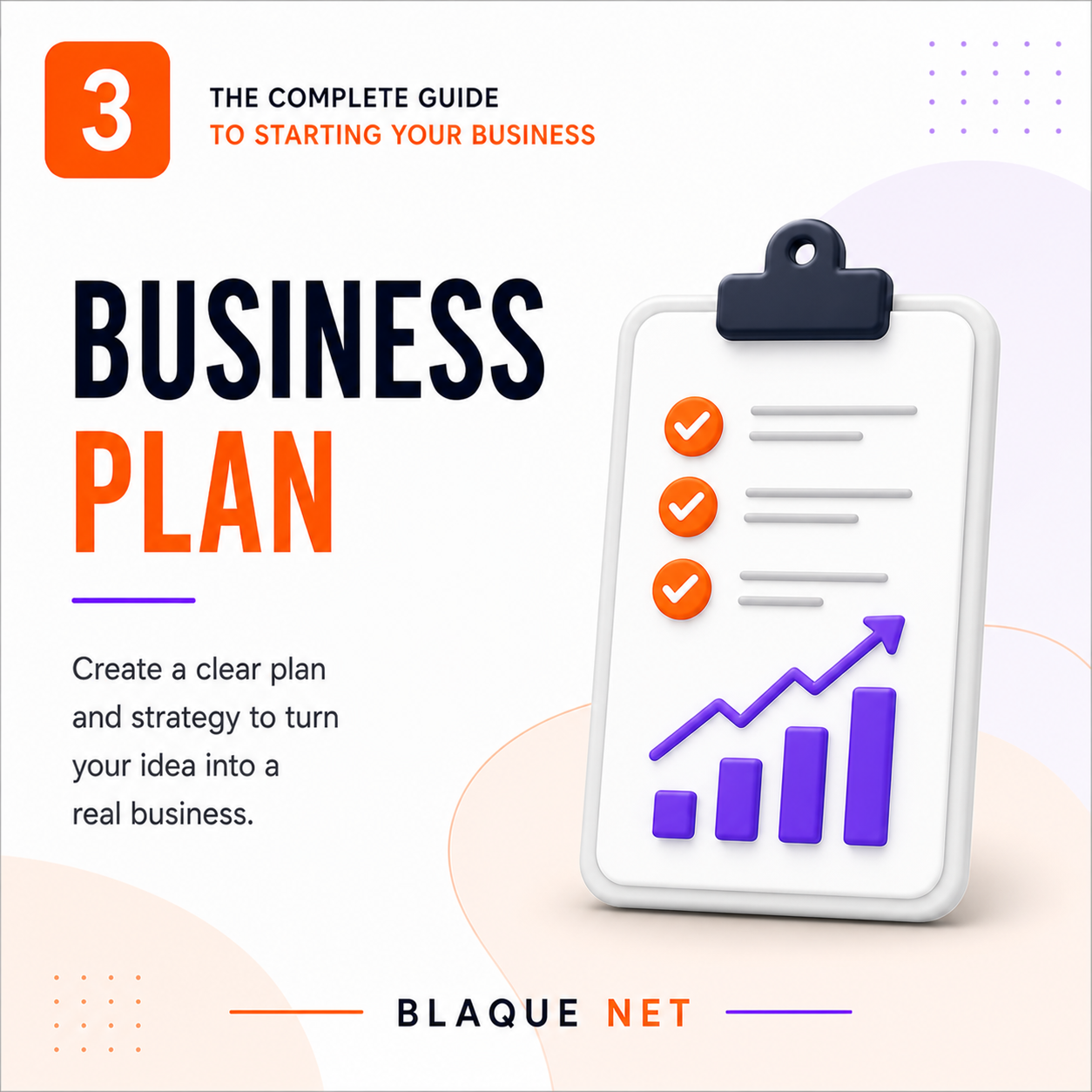
📋 Business Plan & Strategy
A business plan isn't just for investors — it's the thinking you need to do before chaos forces bad decisions. Here's how to build one that actually works.
Why You Need a Plan (Even if You're Not Seeking Funding)
The most common objection: "I don't need a business plan, I'm just going to start and figure it out." And the most common result of that approach: spinning in circles, making expensive decisions without context, and rebuilding from scratch six months in when reality doesn't match assumptions.
A business plan forces you to think through every major area of your business before the market forces those decisions on you. You will make mistakes either way — but the mistakes you make after thinking clearly are much cheaper than the ones you make on the fly.
What a good business plan actually does:
- Forces you to define your market, customer, and competition in concrete terms
- Makes you calculate whether the business can actually be profitable — before you invest
- Creates alignment if you have co-founders, partners, or early team members
- Becomes the document that unlocks SBA loans, investors, and grants
- Gives you a benchmark to measure actual performance against
The 8 Core Sections of a Business Plan
Executive Summary
Written last, placed first. A 1–2 page overview of the entire plan that a reader could use to understand your business without reading anything else.
- Business name, location, and what it does in plain language
- The problem you solve and who has it
- Your solution and why it's better than alternatives
- Business model — how you make money
- Stage you're at and what you're seeking (if applicable)
- Key financial highlights (projected revenue, break-even timeline)
Company Overview
The factual foundation — who you are, how you're structured, and what you stand for.
- Legal structure (LLC, S-Corp, sole prop) and state of registration
- Date founded and business address
- Mission statement (why you exist beyond profit)
- Core values (what guides your decisions)
- Founder background and why you're the right person to build this
- Current stage: idea, MVP, early revenue, scaling
Market Analysis
Evidence that a real, large enough market exists and that you understand it deeply.
- TAM (Total Addressable Market): The total revenue opportunity if you captured 100% of the market
- SAM (Serviceable Addressable Market): The portion of TAM you can realistically reach with your model
- SOM (Serviceable Obtainable Market): The realistic portion you'll capture in years 1–3
- Market trends — is it growing, stable, or shrinking?
- Customer segments — who specifically is buying and why
- Competitive landscape — who else is serving this market and how
Products & Services
Exactly what you're selling, how it works, and why customers will choose it.
- Detailed description of each product or service offering
- The specific problem each one solves
- Pricing structure (tiered, one-time, subscription, hourly)
- Your competitive advantage — what makes this better than alternatives
- Development status — built and selling, MVP in testing, or in development
- IP, patents, or proprietary technology (if applicable)
Marketing & Sales Strategy
How you'll find customers, convert them, and keep them. This should be specific — not "social media and word of mouth."
- Primary marketing channels with reasoning (why these, not all channels)
- Customer acquisition strategy — how a stranger becomes a lead
- Sales process — from first contact to signed contract or completed purchase
- Customer retention strategy — how you keep people coming back
- Pricing strategy and rationale
- Customer acquisition cost (CAC) estimates and lifetime value (LTV)
Operations Plan
How the business actually runs day-to-day — what happens between "customer pays" and "customer receives value."
- Delivery model — how your product or service is produced and delivered
- Key processes and systems (tools, software, workflows)
- Facilities and equipment needed
- Suppliers, vendors, or partners critical to delivery
- Quality control — how you ensure consistency
- Capacity — how many customers/units can you handle at current scale?
Team & Management
Who is building this and why they're qualified. For solo founders, this section explains your background and who you'll add as you grow.
- Founder(s) bio — relevant experience, skills, and why this business
- Current team — roles, responsibilities, and backgrounds
- Organizational structure (even if it's just you right now)
- Advisors or mentors (adds significant credibility)
- Key hires planned — who do you need next and when?
- Gap analysis — what skills does the team currently lack?
Financial Projections
The numbers that prove (or disprove) the business. This is where most founders avoid digging in — and where most bad decisions get made. Even rough numbers built on real assumptions are better than none.
- Startup costs — every cost to get to launch (one-time)
- Monthly operating expenses — fixed and variable costs
- Revenue model and projections (Year 1, 2, 3)
- Break-even analysis — how many units/clients/months to profitability
- Cash flow projection — month by month for at least year 1
- Funding needed — how much, for what, and how it gets repaid or returned
The Financial Numbers Every Founder Must Know
Break-Even Point
This tells you exactly how many sales you need to cover your costs. Know this number before you launch — it's your first real milestone.
Customer Lifetime Value (LTV)
How much is one customer worth to you over time? This determines how much you can afford to spend to acquire them.
Customer Acquisition Cost (CAC)
If your LTV is $500 and your CAC is $600 — you have a problem. LTV should be at least 3× your CAC for a healthy business model.
Competitive Analysis — The SWOT Framework
Do this for your overall business and for each major competitor. Honest SWOT analysis is one of the most useful strategy tools available — if you're actually honest about the weaknesses and threats.
💪 Strengths (Internal)
- What do you do better than competitors?
- What unique resources or skills do you have?
- What do customers consistently praise?
- What's your competitive moat?
⚠️ Weaknesses (Internal)
- What do competitors do better?
- What resources are you missing?
- What skills gaps exist in your team?
- What would a critic say about your business?
🚀 Opportunities (External)
- What market trends favor you?
- What underserved customer segments exist?
- What are competitors ignoring?
- What technology or changes create new demand?
🔴 Threats (External)
- Who could enter your market and crush you?
- What regulations could impact operations?
- What economic conditions pose risk?
- What technology could make your model obsolete?
Lean Plan vs. Full Plan — Know Which You Need
Best for: early-stage validation, internal use, solo founders testing ideas.
- Problem, solution, customer — one paragraph each
- Revenue model and pricing
- Key metrics and milestones
- Basic financial summary
- Update it monthly as you learn
Best for: SBA loan applications, investors, bank financing, major grant programs.
- All 8 sections fully developed
- 3-year financial projections with assumptions
- Detailed market research and citations
- Team bios and org chart
- Appendix with supporting documents
✅ Your Section 3 Checklist
Problem, solution, customer, business model, stage — in plain language. Polish it last.
Even rough numbers with sources. Shows you understand the size and nature of your opportunity.
What am I selling, at what price, and why would someone choose me over the alternatives?
Not "social media and word of mouth" — specific channels with reasoning and a defined sales process.
How does delivery actually work? What tools, vendors, and processes are required?
Fixed Costs ÷ (Price − Variable Cost). Know this number before you spend your first dollar.
Conservative, realistic, and optimistic scenarios. Know what has to be true for each one.
Especially the weaknesses and threats. That's where the strategic insight lives.
Their gaps are my opportunity. Customer complaints about competitors are my product roadmap.
🎯 Quick-Scan Summary
- A business plan is thinking you need to do — not a document you write once for investors and never look at again
- The 8 sections: Executive Summary, Company Overview, Market Analysis, Products/Services, Marketing & Sales, Operations, Team, Financials
- Know your three critical numbers: break-even point, LTV, and CAC — before you launch
- SWOT analysis is only useful when you're honest about weaknesses and threats — that's where the strategy lives
- Start with a lean 1–3 page plan, validate assumptions with real customers, then build the full plan for funding
- Your competitive analysis isn't just about knowing who competitors are — it's about finding what they do poorly
Last Updated: April 2026 · Part 3 of 10 · Blaque Net Start Your Business Series
Need Help Building Your Plan? 🤖
Business Buddy can walk you through each section, help you run numbers, and give real-time feedback on your strategy.
Open Business Buddy →
 Arabic
 English
 French
 Spanish
 Portuguese
 Deutsch
 Turkish
 Dutch
Dutch
 Italiano
 Russian
 Romaian
 Portuguese (Brazil)
 Greek
Greek