
 Resumé
Business Plan & Strategy
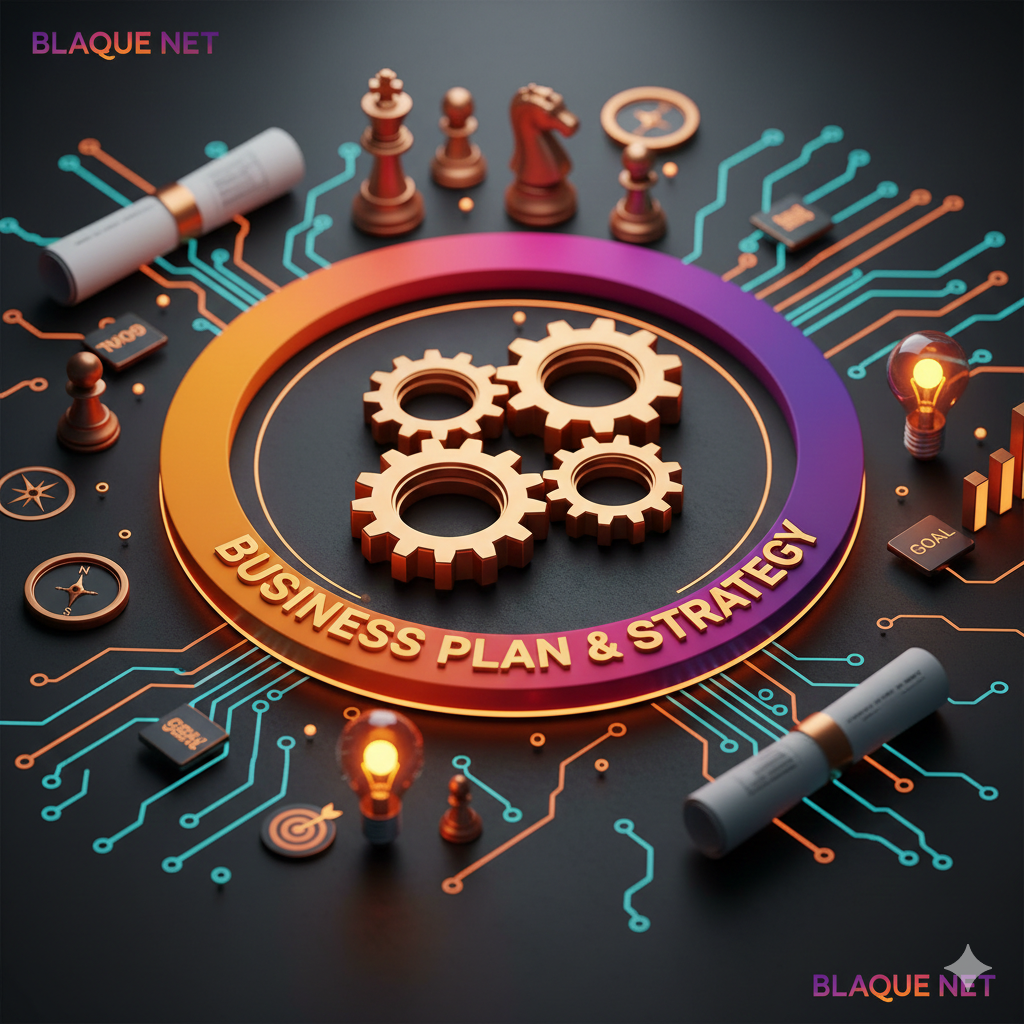
📋 Business Plan & Strategy Guide
A comprehensive guide to creating a winning business plan and developing strategies that drive growth, secure funding, and set your business up for long-term success.
📊 Why Every Business Needs a Plan
A business plan isn't just for securing funding—it's your roadmap to success. Whether you're launching a startup or scaling an existing business, a solid plan helps you:
- ✅ Secure funding - Banks, investors, and grant programs require business plans
- ✅ Clarify your vision - Define your goals, strategy, and path forward
- ✅ Identify challenges - Spot potential obstacles before they become problems
- ✅ Measure progress - Track milestones and adjust strategies as needed
- ✅ Attract partners - Show potential collaborators you're serious and prepared
- ✅ Make better decisions - Use data and strategy to guide business choices
🤖 Need Help With Your Business Plan?
Blaque Bot, your AI-powered Business Buddy, can help you brainstorm ideas, refine your strategy, and answer questions as you build your business plan!
📑 Types of Business Plans
Not all business plans are created equal. Choose the format that matches your needs and audience.
📘 Traditional Business Plan
Length: 20-40 pages
Best For: Bank loans, SBA loans, investors seeking detailed analysis
Includes: Comprehensive financial projections, market research, detailed operations plan
⚡ Lean Startup Plan
Length: 1 page
Best For: Internal planning, quick pivots, agile startups
Includes: Key elements only - problem, solution, market, metrics, unfair advantage
📈 Growth/Expansion Plan
Length: 10-20 pages
Best For: Existing businesses seeking expansion funding, new markets, or strategic pivots
Includes: Current performance data, growth strategy, financial forecasts
📋 Traditional Business Plan: Complete Structure
1. Executive Summary WRITE THIS LAST
A compelling 1-2 page overview of your entire business. Written last, but appears first.
What to Include:
- ✅ Business name, location, and contact info
- ✅ Mission statement - What you do and why it matters
- ✅ Products/services - What you sell in 2-3 sentences
- ✅ Target market - Who your customers are
- ✅ Competitive advantage - Why customers choose you
- ✅ Financial highlights - Revenue projections, funding needs
- ✅ Funding request (if applicable) - How much and what for
2. Company Description
Tell your company's story and explain what makes you unique.
What to Include:
- ✅ Business structure - LLC, S-Corp, C-Corp, etc.
- ✅ Ownership - Who owns the company and what percentage
- ✅ History - When founded, major milestones
- ✅ Location - Physical address, service area
- ✅ Products/services detail - What you offer and key features
- ✅ Business model - How you make money (B2B, B2C, subscription, etc.)
- ✅ Mission, vision, values - Your purpose and culture
3. Market Analysis DATA REQUIRED
Prove there's a real market for your business with data and research.
What to Include:
- ✅ Industry overview - Size, growth rate, trends (use IBISWorld, Statista)
- ✅ Target market - Demographics, psychographics, behaviors
- ✅ Market size - TAM (Total Addressable Market), SAM (Serviceable), SOM (Obtainable)
- ✅ Customer personas - 2-3 detailed ideal customer profiles
- ✅ Market trends - What's changing in your industry
- ✅ Market needs - Problems your business solves
- U.S. Census Bureau (census.gov)
- IBISWorld (industry reports)
- Statista (market statistics)
- Pew Research Center
- Google Trends
4. Competitive Analysis
Identify competitors and explain how you'll win in the market.
What to Include:
- ✅ Direct competitors - 3-5 companies offering similar products/services
- ✅ Indirect competitors - Alternative solutions to the same problem
- ✅ Competitive matrix - Compare pricing, features, strengths, weaknesses
- ✅ Market positioning - Where you fit in the competitive landscape
- ✅ Competitive advantage - Your unique value proposition
- ✅ Barriers to entry - What stops others from copying you
5. Organization & Management
Show who's running the business and why they're qualified.
What to Include:
- ✅ Organizational structure - Chart showing roles and reporting
- ✅ Ownership details - Who owns what percentage
- ✅ Management team bios - Experience, education, achievements
- ✅ Board of directors/advisors - External guidance and expertise
- ✅ Key personnel - Critical roles beyond founders
- ✅ Gaps and hiring plans - Roles you need to fill
6. Products or Services
Detail what you're selling and how it benefits customers.
What to Include:
- ✅ Product/service descriptions - Features, benefits, specifications
- ✅ Pricing strategy - How you price and why
- ✅ Product lifecycle - Development stage, future iterations
- ✅ Intellectual property - Patents, trademarks, copyrights
- ✅ Research & development - Innovation pipeline
- ✅ Suppliers/vendors - Key partnerships for delivery
7. Marketing & Sales Strategy
Explain how you'll attract and retain customers.
What to Include:
- ✅ Marketing strategy - Channels (social media, SEO, paid ads, etc.)
- ✅ Brand positioning - How you want to be perceived
- ✅ Customer acquisition - How you'll get first/next customers
- ✅ Sales strategy - Direct, online, wholesale, partnerships
- ✅ Sales funnel - Path from awareness to purchase
- ✅ Customer retention - How you'll keep customers coming back
- ✅ Marketing budget - Estimated costs and ROI
8. Financial Projections CRITICAL
Show the numbers that prove your business is financially viable.
Required Financial Documents (3-5 Year Projections):
- ✅ Income Statement (P&L) - Revenue, expenses, profit/loss
- ✅ Cash Flow Statement - Money in and out monthly
- ✅ Balance Sheet - Assets, liabilities, equity
- ✅ Break-even analysis - When you'll become profitable
- ✅ Sales forecast - Expected revenue by month/quarter
- ✅ Expense budget - Operating costs breakdown
- ✅ Capital requirements - Startup costs and ongoing needs
- LivePlan - Business planning software with financial templates
- QuickBooks - Accounting software with forecasting
- PlanGuru - Financial forecasting and budgeting
- Excel/Google Sheets - Free template options
9. Funding Request (If Applicable)
If seeking funding, clearly state how much you need and what you'll do with it.
What to Include:
- ✅ Funding amount - Exact dollar amount needed
- ✅ Funding type - Loan, investment, grant, etc.
- ✅ Use of funds - Detailed breakdown (equipment, inventory, marketing, etc.)
- ✅ Terms requested - Loan length, interest rate, equity offered
- ✅ Future funding - Additional rounds anticipated
- ✅ Exit strategy (for investors) - How they'll see returns
10. Appendix
Supporting documents that reinforce your business plan.
Optional Supporting Materials:
- ✅ Resumes of key team members
- ✅ Product photos, mockups, or diagrams
- ✅ Market research data and surveys
- ✅ Letters of intent from customers
- ✅ Legal documents (articles of incorporation, contracts)
- ✅ Permits, licenses, patents
- ✅ Credit reports (business and personal)
🎯 Strategic Planning Frameworks
Use these proven frameworks to develop winning business strategies.
SWOT Analysis
Identify internal strengths/weaknesses and external opportunities/threats.
- Strengths: What you do well
- Weaknesses: Areas to improve
- Opportunities: Market gaps
- Threats: External risks
Business Model Canvas
One-page visual of your business model covering 9 key elements.
- Customer segments
- Value propositions
- Channels & relationships
- Revenue & cost structure
Porter's Five Forces
Analyze competitive intensity and market attractiveness.
- Industry rivalry
- Threat of substitutes
- Buyer/supplier power
- New entrant threats
OKRs (Objectives & Key Results)
Set ambitious goals and measurable outcomes.
- Objective: What you want to achieve
- Key Results: How you'll measure success (3-5 per objective)
- Quarterly or annual timeframes
✍️ Business Plan Writing Tips
Avoid jargon. Write like you're explaining to someone unfamiliar with your industry.
Back up claims with statistics, market research, and credible sources.
Tailor the plan for who's reading it (bankers want different info than VCs).
Typos and errors hurt credibility. Have others review before submitting.
Your plan is a living document. Review and revise quarterly or when things change.
Overly optimistic projections are red flags. Use conservative estimates.
📚 Business Plan Resources & Templates
SBA Business Plan Tool
Free online tool walks you through creating a business plan step-by-step.
SCORE Business Plan Templates
Free downloadable templates for various business types with samples.
LivePlan
Premium software with 500+ sample plans, financial forecasting, and pitch presentations.
Bplans Sample Plans
500+ free sample business plans across all industries for inspiration.
⏱️ Business Plan Timeline
Ready to Build Your Business Plan? 📋
Use this guide as your roadmap, and don't forget—Blaque Bot, your AI-powered Business Buddy, is here to help you brainstorm, refine, and perfect your strategy!
📋 Important Disclaimer:
This business plan guide is for educational and informational purposes only and does not constitute business, financial, legal, or investment advice. Every business is unique and requires a customized approach.
Blaque Net does not guarantee: Funding approval, business success, or specific outcomes from following this guide. Business plans should be tailored to your specific industry, audience, and goals.
Consider consulting with business advisors, accountants, attorneys, and industry experts for personalized guidance. Templates and frameworks are starting points—customize them extensively for your unique situation.
Blaque Net is not affiliated with or partnered with any business planning software, template providers, or services mentioned on this page. We provide educational resources and recommendations based on industry standards.
Last Updated: January 2026 | Resources reviewed for accuracy as of publication date

 French
 English
 Arabic
 Spanish
 Portuguese
 Deutsch
 Turkish
 Dutch
Dutch
 Italiano
 Russian
 Romaian
 Portuguese (Brazil)
 Greek
Greek